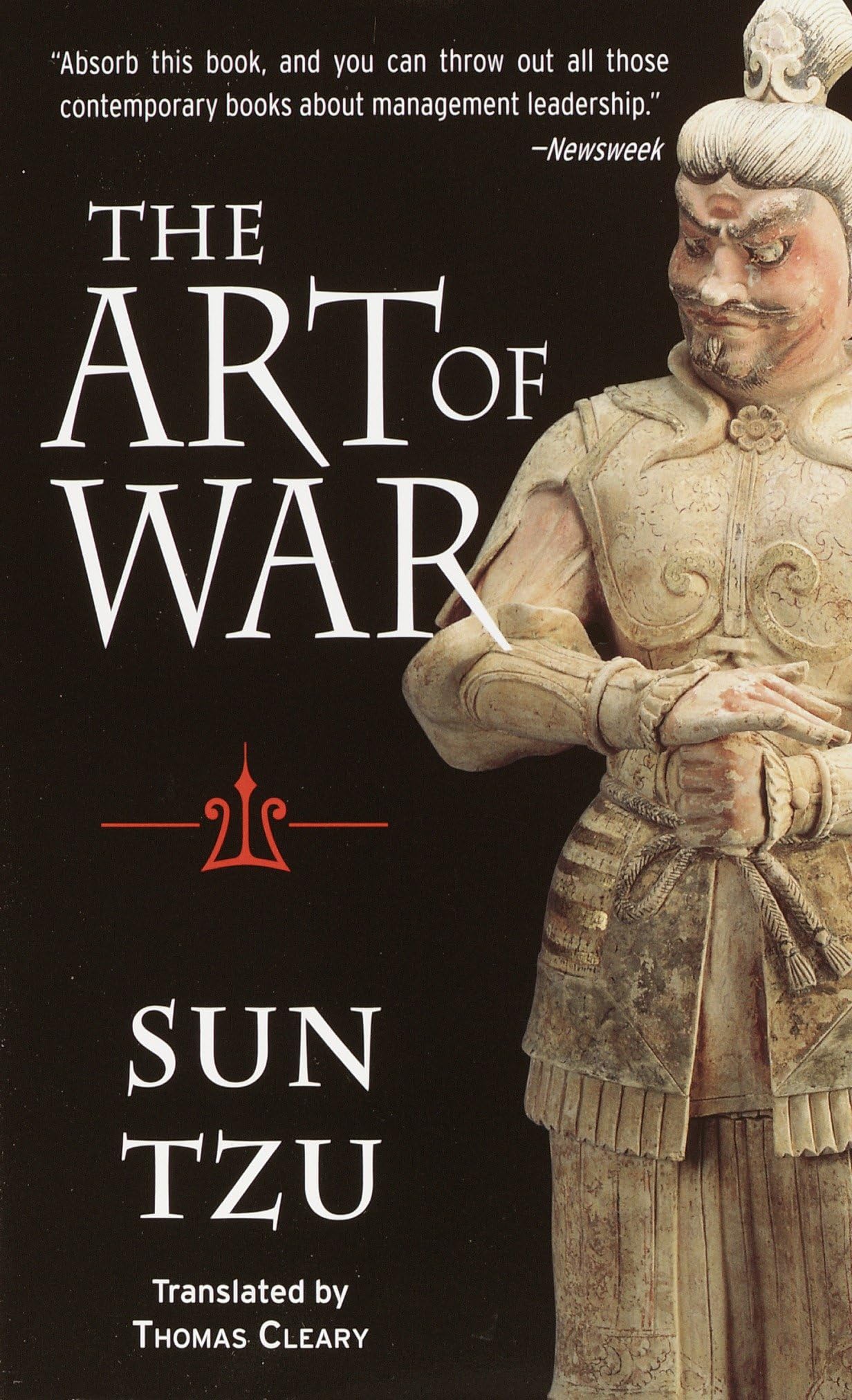
The Art of War
| Publisher | Penguin Classics |
|---|---|
| Published | 500 BC |
| Pages | 112 |
| ISBN | 978-0140455526 |
Why This Book Endures
Written approximately 2,500 years ago, The Art of War by Sun Tzu remains one of the most studied texts in the world — not merely by military strategists, but by executives, negotiators, and policy makers. Its endurance is not accidental. The text is dense with principles that operate at a level of abstraction where they remain applicable regardless of context.
What the Text Actually Says
The common reduction of Sun Tzu to "know your enemy" misses the depth of his argument. The central thesis is more subtle: the supreme achievement is to win without fighting. Every chapter returns to this idea. Victory through deception, positioning, and exploiting the opponent's assumptions — not through direct confrontation.
"Supreme excellence consists in breaking the enemy's resistance without fighting."
This principle maps cleanly onto modern geopolitics, corporate strategy, and even academic debate. The strongest position is one where your opponent concedes ground before the contest begins.
What I Found Most Valuable
Two chapters stood out for practical application:
Chapter 6 — Weak Points and Strong: The argument here is about energy economy — attack where there is no defence, defend where there is no attack. In research terms, this translates to finding the genuinely open questions rather than fighting for marginal ground in crowded fields.
Chapter 13 — The Use of Intelligence: Sun Tzu's emphasis on information superiority over material superiority is prescient. He argues that prior knowledge — not strength — determines outcomes. In an era of information asymmetry, this is more relevant than ever.
Limitations
The text was written for a specific military and political context. Translations vary enormously in quality and interpretation. The Penguin Classics edition I read adds useful historical footnotes, but some translations strip the text bare and lose nuance. The brevity that makes it timeless also makes it open to misreading.
Final Thought
The Art of War is less a manual and more a framework for thinking about competition, information, and resource allocation. Read slowly — each sentence is compressed argument, not narrative. It rewards re-reading at different stages of life.
हेमन्त कुमार
Hemant Kumar
Reader